

The Essential Commercial HVAC and Plumbing Maintenance Checklist.
Commercial and multi‑residential buildings across Metro Vancouver rely on their HVAC and plumbing systems to keep residents, staff, and visitors safe, comfortable, and productive. When these systems fail in a residential high‑rise, laboratory, community pool, or institutional building, the impact can include safety risks, service shutdowns, and very costly emergency repairs.
For owners and facility managers in Metro Vancouver and surrounding municipalities, a structured maintenance plan is one of the most effective ways to prevent downtime, extend equipment life, and control operating budgets.
Why proactive maintenance matters in Metro Vancouver.
Metro Vancouver’s damp, cool winters and long rainy seasons create unique stress on heating, ventilation, and drainage systems, especially in high‑rise towers and pool or recreation environments where humidity is constantly elevated.
- Unplanned failures often cost several times more than planned maintenance once overtime labour, premium parts, and disruption to residents or programs are factored in.
- Well‑maintained systems typically run more efficiently, helping control energy and water use and supporting sustainability and ESG targets common in institutional and multi‑residential portfolios.
These pressures are amplified in laboratories, aquatic centres, and institutional buildings, where strict requirements for temperature, humidity, ventilation, and water quality must be met to ensure safety and compliance.
HVAC checklist for high‑rise, labs, and recreation facilities.
This checklist focuses on residential high‑rises, laboratories and special projects, community pools and recreation centres, and institutional facilities with central plants, rooftop units, heat pumps, boilers, and make‑up air systems.
Monthly to quarterly tasks.
Filters and air cleanliness.
- Inspect and replace filters on central air handlers, corridor units, make‑up air units, and fan coils on a monthly or quarterly schedule, depending on loading.
- In laboratories and certain institutional spaces, ensure filter ratings meet design intent and any applicable standards for air cleanliness and containment.
Visual equipment walkthrough
- Walk through mechanical rooms, rooftops, and service spaces to check for noise, vibration, water on floors, or insulation damage on refrigerant and heating lines.
- In pool and recreation facilities, pay special attention to corrosion on metal components caused by chlorinated, humid air.
Controls and setpoints
- Verify that thermostats, BAS points, and schedules reflect actual occupancy patterns and seasonal requirements in suites, labs, amenity spaces, and common areas.
- Confirm that critical areas such as labs, server rooms, and storage spaces are maintaining the design temperature and humidity ranges.
Seasonal inspections (spring and fall).
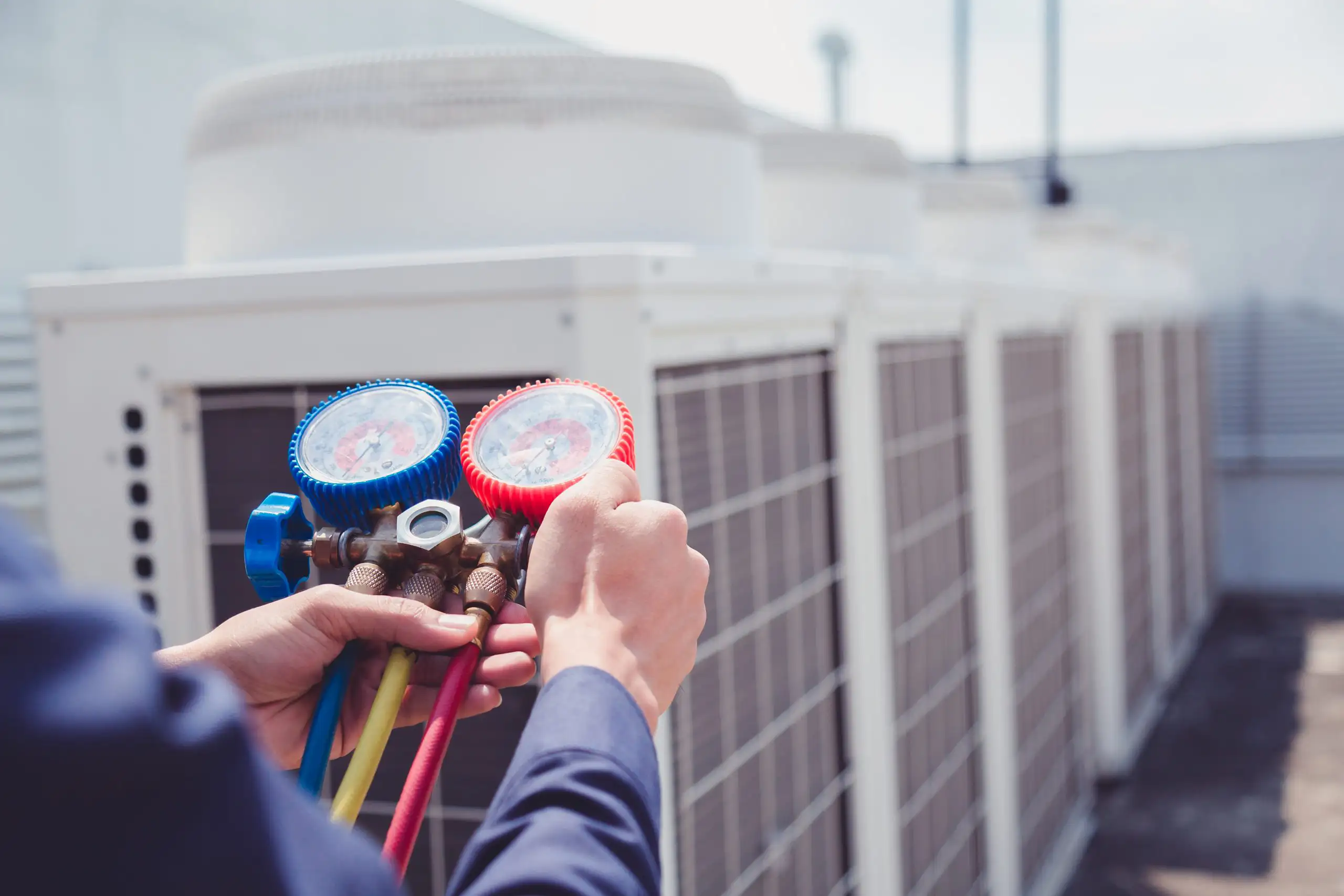
Engaging a qualified HVAC contractor for seasonal inspections is key for systems serving high‑rise residents and sensitive environments.
Heating and cooling performance.
- Test boilers, heat pumps, chillers, and rooftop units in their primary operating modes to confirm proper start‑up, operation, and shut‑down sequences.
- Inspect heat exchangers, burners, flues, and combustion air paths for damage, corrosion, or improper venting, especially in gas‑fired boiler plants.
Coils, airflow, and ventilation.
- Clean the evaporator and condenser coils, and verify that the outdoor air intakes are free of debris, bird nesting, or standing water.
- Confirm ventilation rates in critical areas such as labs, high‑occupancy amenity spaces, and aquatic centres are aligned with design and operational requirements.
Dehumidification and pool environments.
- For community pools and aquatic centres, verify that dehumidification units, heat recovery, and exhaust systems operate correctly and maintain appropriate space humidity and air distribution to minimize condensation and corrosion.
- Inspect ductwork, diffusers, and return locations around pools to prevent cold drafts and condensation on glazing and structural elements.
Annual or major service items.
Full mechanical system review
- Inspect pumps, valves, strainers, expansion tanks, and hydronic loops; clean strainers, check pump alignment, and verify pressure control devices.
- Review balancing reports or consider re‑balancing for high‑rise buildings where resident comfort issues, hot/cold complaints, or stratification persist.
Controls and optimization
- Review BAS trends for boilers, chillers, heat pumps, and ventilation units to identify opportunities to refine scheduling, reset strategies, and staging logic for energy savings.
- Confirm alarms are configured correctly for critical areas such as labs, mechanical rooms, and pool equipment spaces, including high humidity, high temperature, or low flow alarms.
Plumbing checklist for high‑rise and institutional systems.
HVAC issues often get more attention, but plumbing failures can cause significant disruption and damage in high‑rise, institutional, and recreation facilities. A proactive approach to plumbing maintenance reduces risk and protects both residents and programs.
Regular inspection tasks
Domestic water systems
- Check domestic cold and hot‑water piping, risers, and mechanical rooms for leaks, corrosion, or abnormal noises.
- Confirm hot‑water temperatures and recirculation loops meet comfort and safety targets, and verify mixing valves function correctly in institutional and special-use areas.
Fixtures and high‑use areas
- Inspect common‑area washrooms, change rooms at pools and recreation centres, and shared facilities in institutional buildings for dripping faucets, running toilets, or damaged flush valves.
- Identify and prioritize repair of chronic trouble fixtures that drive up water consumption or create nuisance calls.
High‑rise‑specific issues
- Monitor pressure zones and PRVs to ensure upper floors maintain stable pressure without overpressurizing lower floors.
- Verify that drain stacks and venting systems are functioning properly, particularly after any renovations or retrofits.
Drainage, pools, and specialty spaces
Routine drain maintenance
- Schedule periodic cleaning of floor drains, trench drains, and shower drains in change rooms, pool decks, and labs where spills or chemicals may be present.
- Ensure strainers and catch basins are cleaned regularly to avoid blockages, especially in underground parking and loading areas exposed to debris.
Pool and water‑feature systems
- Inspect pool piping, strainers, and circulation systems for leaks, air entrainment, and proper flow.
- Check backwash, waste, and overflow arrangements to ensure safe discharge routing and prevent flooding in mechanical spaces.
Annual compliance and safety checks.
Backflow prevention and cross‑connection control
- Confirm that backflow prevention devices serving domestic water, pools, irrigation, labs, and mechanical equipment are tested and certified at required intervals.
- Maintain clear records and tagging for each device to help demonstrate compliance to authorities.
Emergency shut‑offs and response plans
- Label and test critical isolation valves for domestic water, fire protection interfaces where applicable, and major branch circuits serving high‑rise risers or special-use zones.
- Ensure building staff know the location of main and zone shut‑offs and understand escalation procedures for leaks and overflows.
Conclusion: Proactive maintenance creates longevity and saves money.
A proactive commercial HVAC and plumbing maintenance program helps Metro Vancouver high‑rise, lab, pool, and institutional buildings reduce breakdowns, control energy and water costs, and extend equipment life. By following a clear, scheduled checklist instead of reacting to emergencies, owners better protect occupants, budgets, and assets while supporting comfort, safety, and compliance across their portfolios.
The future of high performance mechanical – True Mechanical.
Across Vancouver and Western Canada, True Mechanical continues to lead mechanical innovation, collaborating with clients and engineers to integrate next-generation systems from the earliest design phase.
If you have a project you’d like to discuss, contact our team and lets make something happen.
Frequently Asked Questions.
How often should commercial HVAC systems be serviced in Metro Vancouver high‑rise buildings?
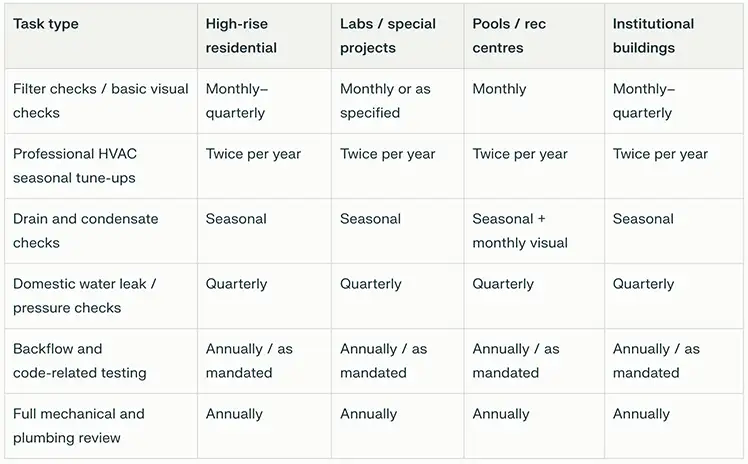
Commercial HVAC systems in Metro Vancouver high‑rise residential and institutional buildings are typically serviced at least twice per year, with additional monthly or quarterly filter and visual checks to handle local climate and usage demands.
What is included in a commercial HVAC maintenance checklist for laboratories and special‑use facilities?
A commercial HVAC maintenance checklist for labs usually includes filter changes, airflow and ventilation verification, coil cleaning, performance testing of critical equipment, and controls calibration to maintain safe temperature and humidity conditions.
Why is preventative HVAC maintenance important for community pools and recreation centres?
Preventative HVAC maintenance in aquatic centres helps control humidity, protect building structure from corrosion and condensation, and ensure comfortable, safe air quality for staff and visitors around the pool deck.
How often should commercial plumbing systems be inspected in Metro Vancouver buildings?
Commercial plumbing systems in high‑rise and institutional buildings are commonly inspected on a quarterly basis for leaks and pressure issues, with an annual full review and required backflow testing to reduce the risk of water damage and service interruptions.
What is a commercial plumbing maintenance checklist for high‑rise residential towers?
A commercial plumbing maintenance checklist for high‑rise towers usually covers domestic hot and cold‑water systems, pressure‑reducing valves, risers, fixtures in common areas, and regular inspection of drainage and vent stacks.
How can regular HVAC and plumbing maintenance reduce operating costs in Metro Vancouver commercial properties?
Regular HVAC and plumbing maintenance improves energy and water efficiency, reduces emergency call‑outs, and extends equipment life, which helps lower overall operating costs for property owners and facility managers in the Metro Vancouver area.
Do community pools and recreation centres need special plumbing maintenance?
Yes, pools and recreation centres require extra plumbing attention, including frequent inspection of pool circulation piping, strainers, drains, change‑room fixtures, and backflow prevention to avoid flooding, contamination, and unplanned shutdowns.
What is the best maintenance plan for commercial HVAC and plumbing in Metro Vancouver?
The best maintenance plan for Metro Vancouver buildings usually combines monthly or quarterly inspections with seasonal HVAC tune‑ups and an annual full mechanical and plumbing review tailored to building type, occupancy, and local regulations.
How do I choose a commercial HVAC and plumbing maintenance company in Metro Vancouver?
Look for a contractor with proven experience in residential high‑rise, laboratory, pool, and institutional projects in the Lower Mainland, along with proper licensing, 24/7 support, and the ability to provide customized maintenance programs.
Can a commercial HVAC and plumbing maintenance program help with compliance and insurance requirements?
A documented maintenance program with regular inspections, backflow testing, and code‑aligned service can support compliance expectations and may strengthen the position of property owners when dealing with insurers or inspections after an incident.